San Antonio-Based Road Trips to Texas Islands
A road trip from San Antonio to South Padre Island is one of the most popular coastal drives in Texas. The trip covers roughly 285–300 miles depending on the route and typically takes about five to five and a half hours of driving time.
Travelers usually take Interstate 37 south to Corpus Christi, then continue on U.S. Highway 77/Interstate 69E through the Rio Grande Valley before turning east on Texas Highway 100 toward the coast. The final stretch crosses the Queen Isabella Memorial Causeway, the only road connecting the mainland town of Port Isabel to South Padre Island.
Along the way, the drive passes several notable coastal towns and wildlife areas, making it easy to turn the journey into a multi-stop Texas Gulf Coast adventure.
The Route from San Antonio to South Padre Island
The most common driving route begins in San Antonio on Interstate 37, heading south toward Corpus Christi. From there, travelers continue on U.S. Highway 77 / Interstate 69E through cities such as Kingsville, Harlingen, and San Benito.
The final leg follows Texas Highway 100 from the mainland town of Port Isabel across the Queen Isabella Memorial Causeway, a bridge about 2.37 miles long that spans the Laguna Madre and connects the island to the Texas mainland.
The drive typically takes five to five and a half hours without stops, though many travelers choose to break up the trip with coastal detours.
Major San Antonio Attractions Before You Hit the Road
https://sanantoniohappens.com/san-antonio-riverwalk-boat-rides/
Before heading to the coast, many travelers spend time exploring San Antonio’s major landmarks.
The San Antonio River Walk, also called Paseo del Río, is a network of pedestrian walkways stretching more than 15 miles along the San Antonio River. Restaurants, shops, and riverboat tours make it one of the city’s most visited attractions.
Nearby, The Alamo stands as one of Texas’ most famous historic sites. Located at Alamo Plaza, the mission dates back to the early 1700s and became famous during the 1836 Battle of the Alamo.
Another popular destination is the Pearl District, a revitalized historic brewery complex north of downtown that now houses restaurants, shops, and a weekend farmers market.
Exploring these sites before departing can turn a simple road trip into a full San Antonio experience.
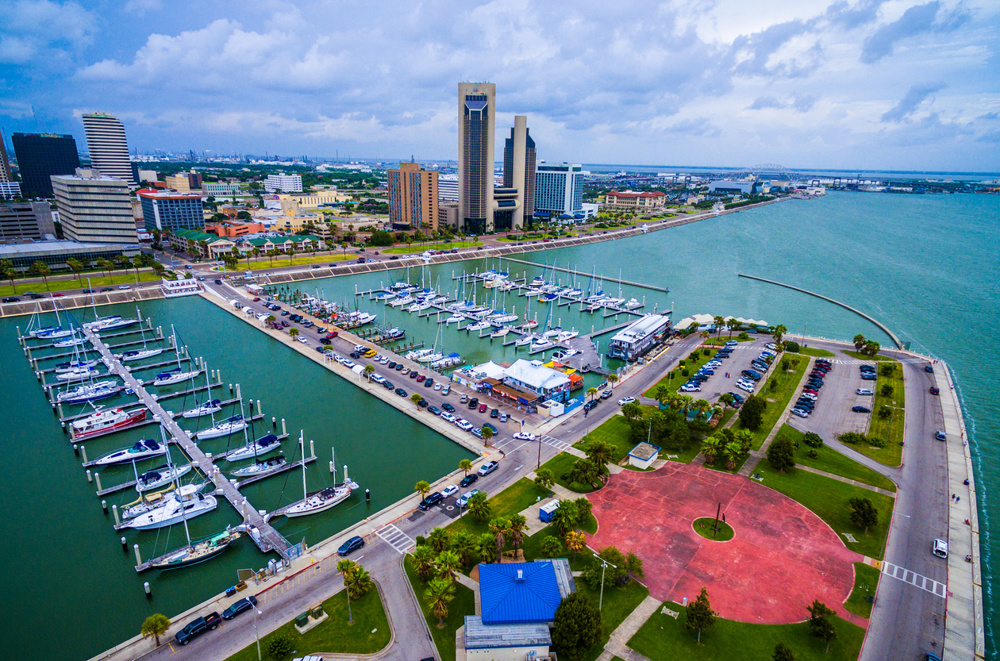
Corpus Christi Detour: USS Lexington and Texas State Aquarium
About halfway through the drive, Corpus Christi offers one of the best stopover opportunities along the Texas coast.
The USS Lexington Museum on the Bay is a retired World War II aircraft carrier commissioned in 1943. The ship served extensively in the Pacific theater and earned 11 battle stars before being decommissioned in 1991.
Visitors can tour the flight deck, explore aviation exhibits, and view restored military aircraft aboard the ship.
Just next door is the Texas State Aquarium, which focuses on Gulf of Mexico marine life and conservation. Exhibits highlight dolphins, sea turtles, coral reefs, and coastal ecosystems found along the Texas shoreline.
Together, these attractions make Corpus Christi a convenient and educational stop on the way to South Padre Island.
Rockport and Aransas National Wildlife Refuge
About 30 miles northeast of Corpus Christi, the coastal town of Rockport offers a quieter alternative to the larger coastal cities.
Rockport Beach Park is notable for being Texas’ first Blue Wave certified beach, recognized for cleanliness and environmental standards. The park features a sandy shoreline, fishing pier, picnic areas, and calm waters suitable for swimming.
Nearby, the Aransas National Wildlife Refuge protects more than 115,000 acres of coastal habitat. The refuge is famous for hosting one of the largest wintering populations of endangered whooping cranes, which migrate to the area each year.
Birdwatchers can often see cranes, herons, and other coastal wildlife from observation towers and driving loops within the refuge.
Fort Ringgold and Rio Grande Valley History
Further south in the Rio Grande Valley, travelers can visit Fort Ringgold in Rio Grande City, a historic U.S. Army post established in 1848 after the Mexican–American War.
The fort played a role in regional border security and later served as a military training facility. Several historic structures remain today, including officers’ quarters and the well-known Lee House, which now serves as a local museum.
Although it requires a short detour from the main route, Fort Ringgold offers insight into the military history that shaped South Texas during the 19th century.
Where to Stop Between San Antonio and South Padre Island
Breaking up the drive with stops can make the trip more enjoyable.
Common places to stop include:
- Corpus Christi for museums and waterfront attractions
- Rockport for beaches and birdwatching
- Port Isabel for historic sites and seafood restaurants
Smaller towns along U.S. Highway 77 / I-69E also offer gas stations, restaurants, and rest areas that provide convenient breaks during the drive.
Many travelers plan the trip as a one-day drive with one or two sightseeing stops, while others spread it over a full weekend coastal itinerary.
Crossing the Queen Isabella Memorial Causeway
The final step before reaching South Padre Island is crossing the Queen Isabella Memorial Causeway, the only road connecting the island to the mainland.
Completed in 1974, the causeway stretches about 2.37 miles across the Laguna Madre, one of the largest hypersaline lagoons in the world.
The bridge offers wide views of the bay and the Gulf of Mexico, and it has become one of the most recognizable landmarks along the Texas Gulf Coast.
South Padre Island: Beaches and Coastal Activities
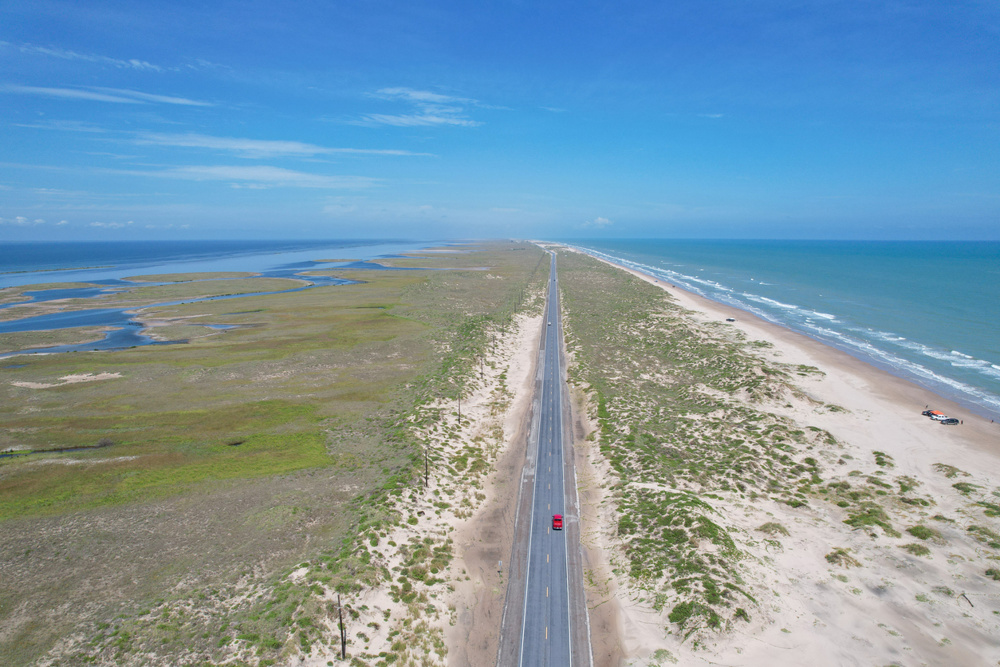
South Padre Island is a 34-mile barrier island known for its beaches, wildlife viewing, and water sports.
Public beach access points line State Park Road 100 and Gulf Boulevard, allowing visitors to reach the Gulf shoreline easily.
Popular activities include:
- Dolphin-watching boat tours
- Fishing charters
- Parasailing and jet skiing
- Birdwatching in coastal wetlands
Isla Blanca Park, located at the southern end of the island, is one of the most popular beach areas and features picnic sites, camping areas, and fishing spots.
The island also serves as a viewing location for SpaceX rocket launches from nearby Boca Chica when launch schedules allow.
Best Seafood Stops Along the Texas Coastal Route
A Texas Gulf Coast road trip is also an opportunity to experience some of the region’s best seafood restaurants.
Corpus Christi
- Water Street Oyster Bar – Known for fresh Gulf oysters and coastal seafood dishes.
- Doc’s Seafood & Steaks – A waterfront restaurant near Padre Island with Gulf views.
Rockport
- Charlotte Plummer’s Seafare Restaurant – A longtime local favorite serving shrimp, oysters, and Gulf fish.
- The Boiling Pot – Casual seafood boils featuring crab, shrimp, and crawfish.
Port Isabel / South Padre Island
- Joe’s Oyster Bar – Popular for fried seafood platters and shrimp cocktails.
- Blackbeard’s Restaurant – A well-known island restaurant serving seafood and American coastal classics.
These stops add local flavor to the journey while highlighting the seafood traditions of the Texas Gulf Coast.
Other Texas Island Destinations Worth the Drive
While South Padre Island is one of the most popular Texas coastal destinations, several other islands along the Gulf Coast offer equally memorable road-trip experiences from San Antonio.
Mustang Island
Located near Port Aransas and Corpus Christi, Mustang Island State Park offers more than five miles of natural beachfront and nearly 4,000 acres of coastal habitat. Visitors come for swimming, fishing, kayaking, camping, and birdwatching along the Texas Gulf shoreline.
The park also features the Mustang Island Paddling Trail, a series of shallow-water kayaking routes through marshes and seagrass flats. Spring and fall migrations make the island a popular stop for birdwatchers, with hundreds of species passing through the area.
Padre Island National Seashore
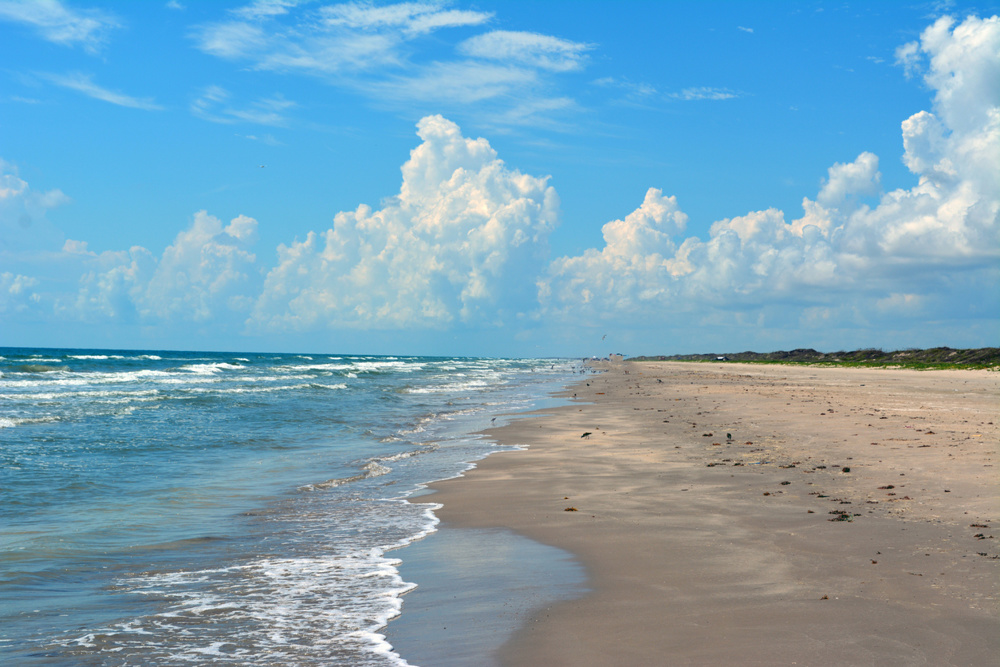
Just south of Corpus Christi lies Padre Island National Seashore, a protected stretch of coastline that preserves more than 70 miles of undeveloped barrier island, making it the longest protected barrier island shoreline in the world.
The national seashore is known for its sand dunes, coastal prairies, and Laguna Madre lagoon ecosystems, which support diverse wildlife including sea turtles, coyotes, and migratory birds.
Because the area lies along the Central Flyway, more than 380 bird species have been documented in the park, making it one of the most significant bird-watching destinations in North America.
Matagorda Island
For travelers seeking a more remote coastal experience, Matagorda Island offers rugged natural landscapes and limited visitor access.
This barrier island along the Matagorda Peninsula supports large populations of migratory birds, white-tailed deer, and coastal wildlife. The island is managed largely as a wildlife management area, with opportunities for birdwatching, fishing, and nature exploration.
Because transportation typically requires a boat ride or guided access, Matagorda Island attracts travelers interested in secluded Gulf Coast environments rather than resort-style beaches.
Port Isabel Lighthouse and Historic Harbor
Just across the causeway, the town of Port Isabel preserves one of the Texas coast’s most recognizable historic structures.
The Port Isabel Lighthouse, built in 1852, guided ships navigating the Laguna Madre during the 19th century. Standing about 57 feet tall, the brick lighthouse now operates as a museum open to visitors.
Climbing the tower provides sweeping views of South Padre Island, the Laguna Madre, and the surrounding coastline.
Nearby waterfront restaurants and shops make Port Isabel a popular stop before or after visiting the island.
Best Time of Year for a South Padre Island Road Trip
Spring and summer are the most popular seasons for visiting South Padre Island, but each offers different travel conditions.
Spring (March–May) typically brings comfortable temperatures ranging from the 60s to mid-80s°F, making it ideal for sightseeing and beach walks.
Summer (June–August) offers warm Gulf waters perfect for swimming, but daytime temperatures often climb into the 90s°F, and humidity can be high.
Spring and fall tend to provide the most balanced weather for road trips and outdoor activities along the Texas coast.